Camera settings for beginners: the only 3 things that matter
A straightforward tutorial on aperture, shutter speed and ISO. No jargon, no triangle diagrams : just what actually matters on the field.
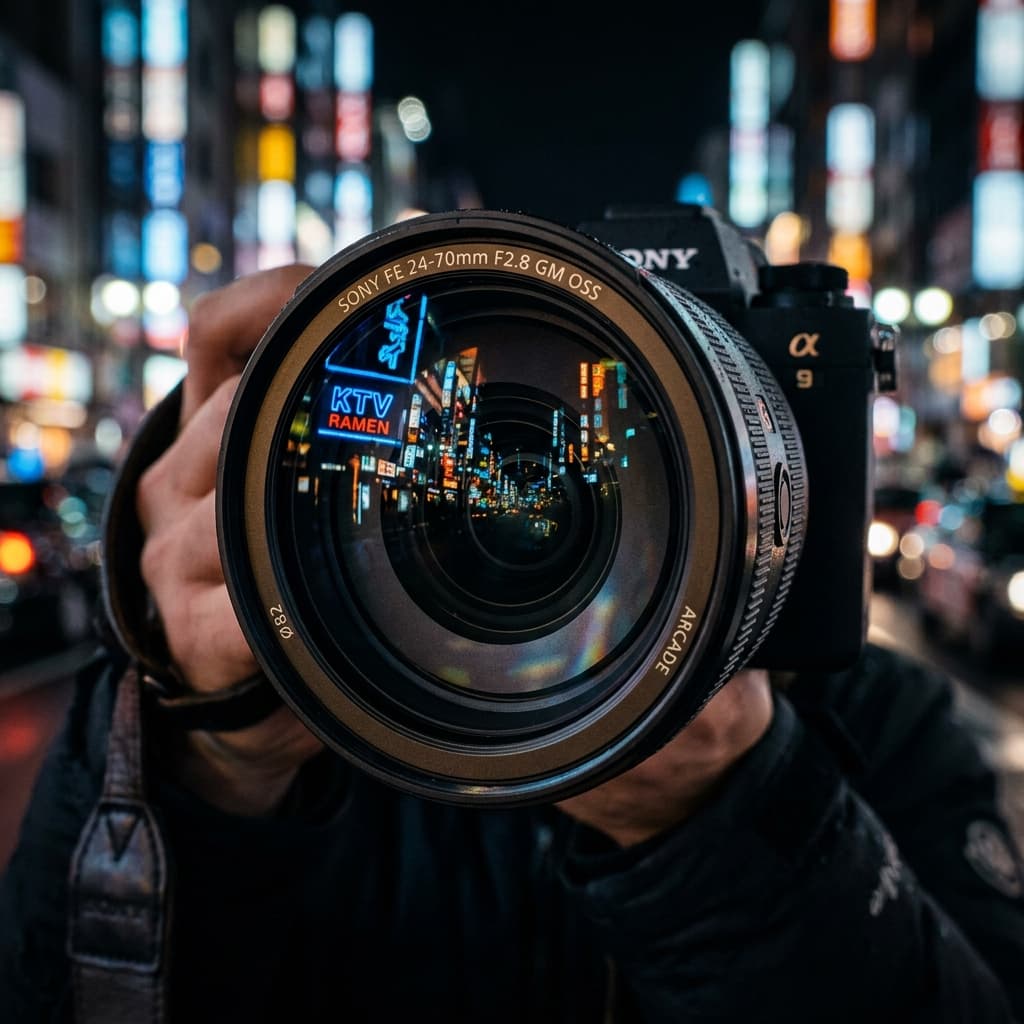
Camera settings for beginners: the only 3 things that matter
Exposure theory gets explained with triangles, stops, tone maps... Stuff that makes you want to quit. Here's the simple version.
There are only three things that matter

1. Aperture (the f/)
The number one setting. The first one to touch.
Aperture is how wide your lens opens. It's measured in f/1.4, f/2.8, f/4, f/8, etc. The smaller the number, the wider it opens.
It controls two things at once:
- Light coming in. f/1.4 = lots of light. f/8 = very little.
- Depth of field. f/1.4 = only your subject is sharp, the background blurs away. f/8 = everything is sharp.
Concrete example: a portrait at f/2.8, the face is sharp, the background melts into a clean blur. For a car, close down to f/5.6 or f/8 so the whole body is sharp.
In practice: always start by choosing the aperture based on what you want (blurry background or everything sharp), then adjust everything else around it.
2. Shutter speed (the 1/xxx)
How long the sensor stays exposed. 1/1000 is fast. 1/30 is slow.
The simple rule: if your subject moves, you want a fast shutter. If it's still, you can go slower.
The classic mistake: shooting handheld at 1/30 thinking that's fine. Result, everything is blurry. Not the subject, EVERYTHING. That's motion blur from your own hands.
The golden rule to avoid this: your shutter speed should be at least the inverse of your focal length. At 50mm, stay above 1/50. At 85mm, 1/85 minimum. Not perfect but it'll save your life.
For a moving subject: 1/500 minimum, often 1/1000.
3. ISO
Your sensor's sensitivity. 100 = not sensitive (needs lots of light). 3200 = very sensitive (works in the dark).
The higher you push ISO, the more noise (grain) you get.
Simple approach: ISO 100 outdoors during the day. Indoors, 800 or 1600 without feeling guilty. Above 3200 it starts getting grainy on an A7 III. But a bit of grain isn't the end of the world. A sharp photo with grain is always better than a blurry photo without.
How to set up your camera in practice
The process when arriving at a shoot:
- Pick the aperture first (f/2.8 for a portrait, f/5.6 for a car, f/8 for a landscape)
- Set the shutter speed based on the subject (1/250 for someone posing, 1/1000 if they're moving)
- Take a test shot. If it's too dark, raise the ISO. Never touch aperture or shutter speed to fix exposure : ISO absorbs the difference.
Don't be scared of manual mode

Aperture priority for a year before going full manual is a normal path. No shame in that.
In short
Aperture → controls background blur and light Shutter speed → freezes or allows motion ISO → compensates when there's not enough light
That's it. The rest is practice.
If you want to learn on the field instead of in theory, contact me. I do photo sessions in Lyon and show everything live : that's how you learn fastest.
Website, photo shoot or video.
Let's talk.