Shooting at night without a tripod: field tricks
How to get sharp photos at night without a tripod. Concrete techniques: high ISO, wide aperture, stabilization, improvised supports.
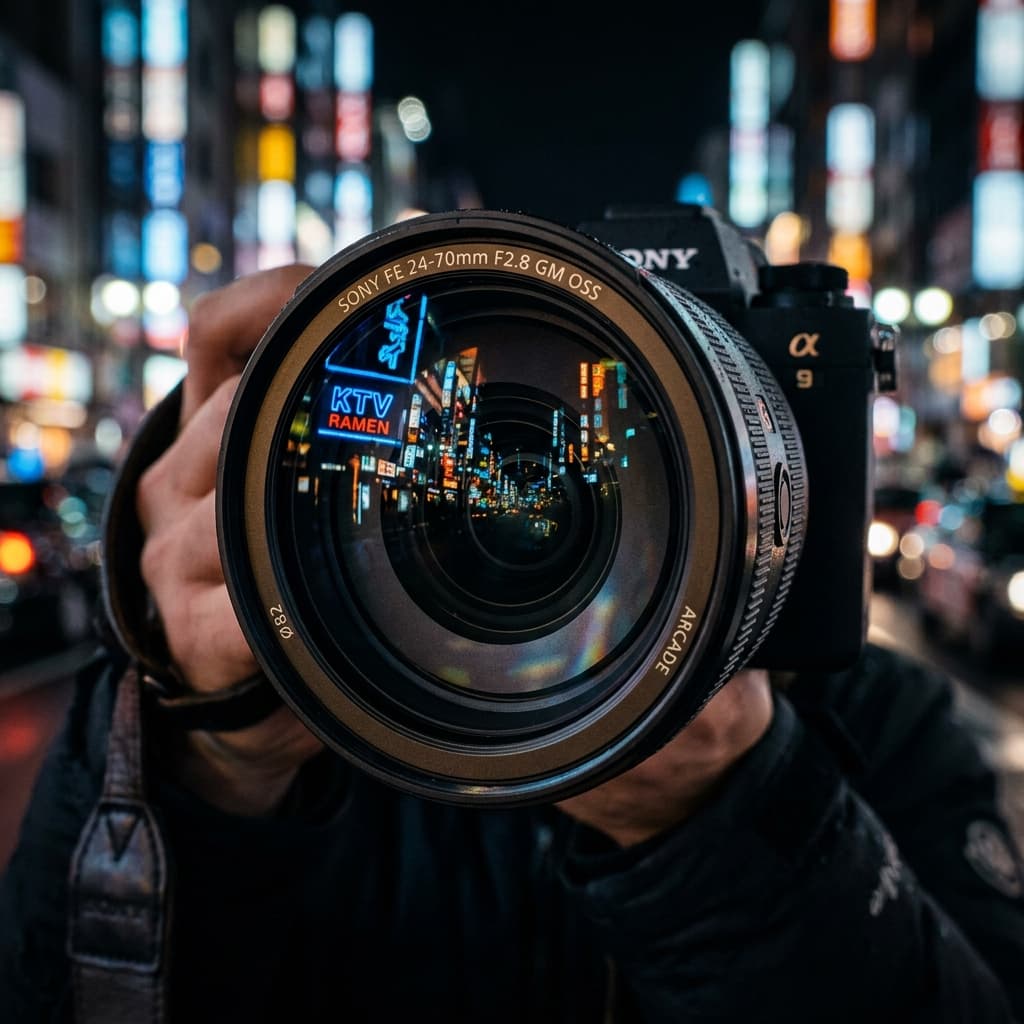
Shooting at night without a tripod: field tricks
Sometimes you just don't have your tripod. Tough, you improvise. Here are the techniques that work.
Crank the ISO, embrace the grain
The obvious solution but people are scared of noise. Wrongly.
On a Sony A7 III, you can push to 6400 ISO and it's still usable. Not perfect, but usable. A bit of grain in a night photo actually adds mood. It's not a flaw, it's a style.
The real question: would you rather have a sharp photo with grain or a blurry photo without? The first one, every single time.
Open wide

The wider you open, the more light comes in. It's mechanical. You can gain 2 or 3 stops just by going from f/4 to f/1.8. That's the difference between a blurry photo and a sharp one.
In-body stabilization

If your camera has stabilization, turn it on. If your lens has it too, even better. They stack.
Find a support
No tripod? Use what's around you.
- A wall: press your back against a wall, elbows tight against your body. You become a much more stable human tripod.
- A pole, a railing: rest the camera on it. Even if it's not flat, you stabilize part of the shake.
- Your leg: crouching, knee on the ground, camera resting on your thigh. Weird but it works.
- A car hood: for night car shoots, rest the camera on the hood with the self-timer. Works great.
The self-timer
Hidden gem. When you press the shutter, you create a micro-movement. At night, that micro-movement is enough to blur your shot.
Solution: set the self-timer to 2 seconds. You press, let go, the camera fires 2 seconds later when everything is still. Game changer.
Burst mode
Shoot bursts of 3 or 5 frames. Out of 5, there's always one or two that are sharper than the rest. Delete the others.
Brute force, but it works.
Breathing
Sounds stupid but it matters. Take a breath, hold it, fire, exhale. Shooter technique. Simple and effective.
What doesn't work
- Moving during the shot. Obvious but worth reminding.
- The built-in flash. It slams an ugly light on the subject and kills the night mood.
- Zooming all the way if you don't need to. The more you zoom, the more shake gets amplified. Stay as wide as you can.
The night setup
- Aperture: f/1.8 or f/2.8 (as wide as possible)
- Shutter: 1/60 minimum, 1/125 if possible
- ISO: 3200 to 6400, own the grain
- Stabilization: on
- Self-timer: 2s if you have a support
With this, you get usable shots almost every time. Not studio-quality, but photos with a night vibe all their own.
Want a night shoot in Lyon? Contact me, I'm used to tough conditions.
Website, photo shoot or video.
Let's talk.